
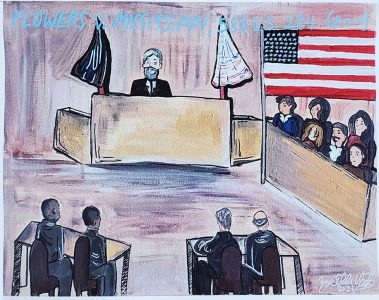
Flowers v. Mississippi: 2019
 Curtis Flowers faced an extraordinary legal ordeal, being tried six separate times for the 1996 murders of four employees at a Mississippi furniture store. Flowers, a Black man, saw his trials marred by allegations of racial discrimination. During the first two trials, the State used its peremptory strikes to exclude all Black prospective jurors. Flowers was convicted and sentenced to death both times, but the Mississippi Supreme Court overturned these convictions due to prosecutorial misconduct.
At the third trial, the State again used all 15 of its peremptory strikes against Black jurors, leading to another conviction and death. sentence. This conviction was also reversed by the Mississippi Supreme Court, citing a violation of the precedent set by Batson v. Kentucky, which prohibits racial discrimination in jury selection. The fourth and fifth trials resulted in mistrials, with the State continuing to use peremptory strikes disproportionately against Black jurors.
In the sixth trial, the State exercised six peremptory strikes, five of which were against Black prospective jurors, allowing only one Black juror to be seated. Flowers raised a Batson claim once more, but the trial court accepted the State’s race-neutral explanations for the strikes. Flowers was again convicted and sentenced to death, a decision upheld by the Mississippi Supreme Court.
The key issue before the U.S. Supreme Court was whether the State’s peremptory strike of a Black prospective juror was motivated by discriminatory intent. The Court found that it was. The history of the State’s peremptory strikes in Flowers’ trials revealed a consistent effort to exclude Black jurors, strongly suggesting a discriminatory motive. The Supreme Court concluded that the State’s actions were driven in substantial part by racial discrimination, violating Flowers’ rights under Batson v. Kentucky.


